

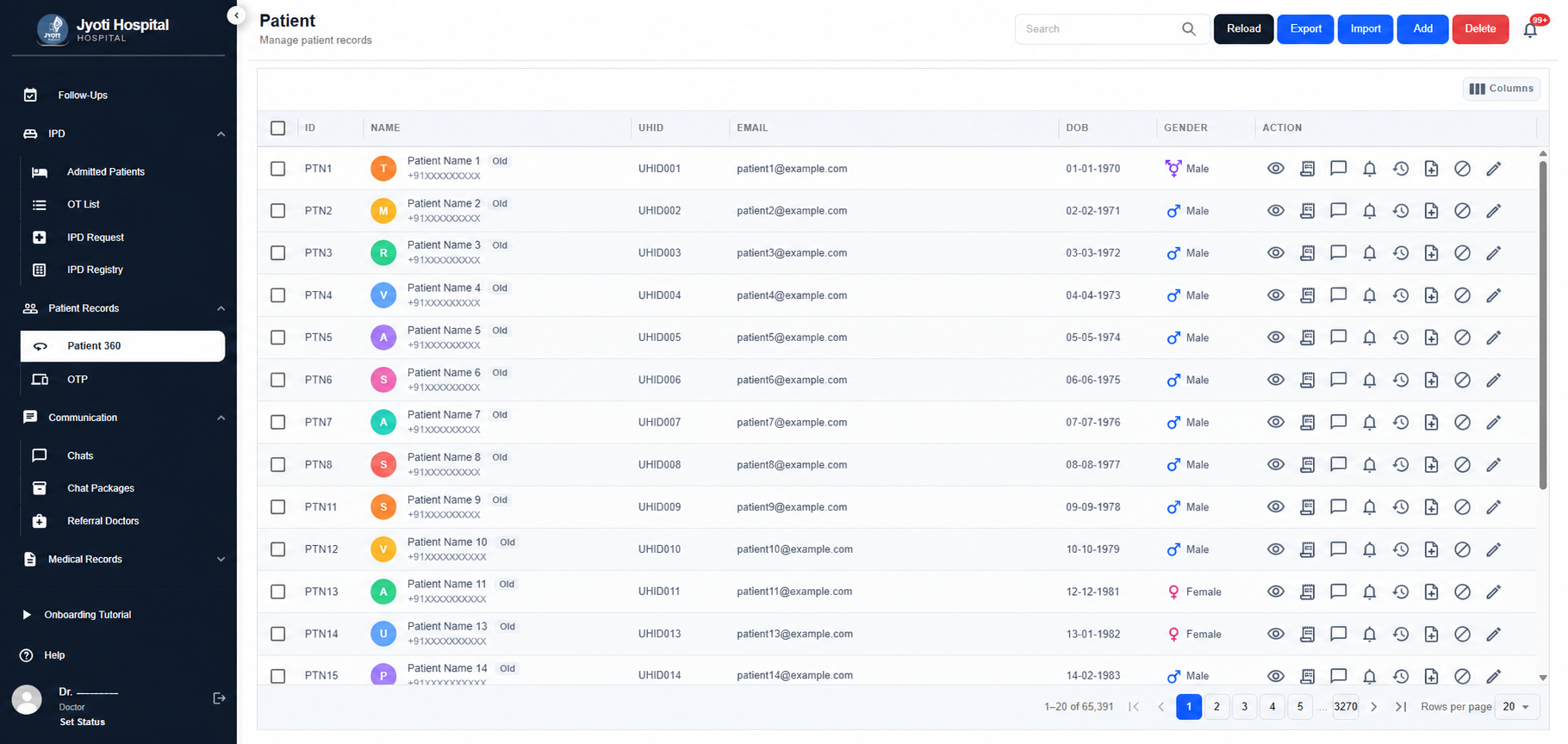
Get a Complete View of Patient History with Inteliya
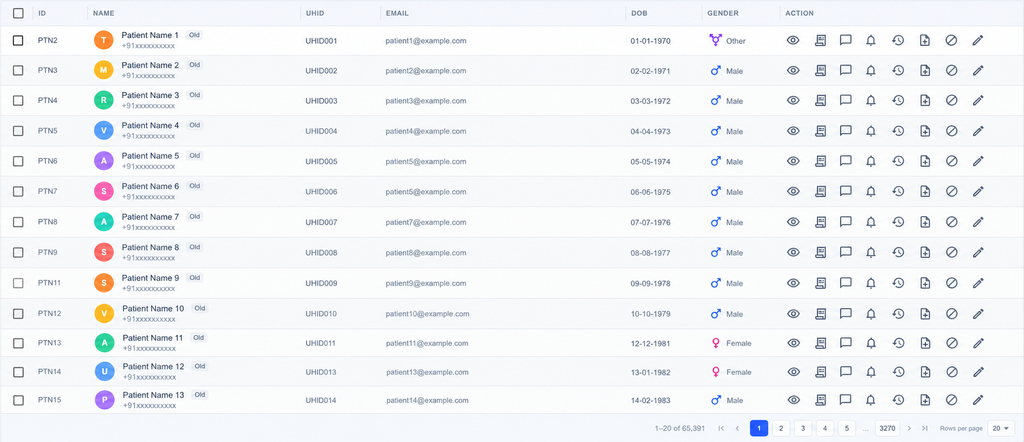
Every patient interaction adds another part to their medical journey. Previous consultations, prescriptions, diagnostic reports, hospital admissions, and follow-up visits can all provide important context for the next clinical encounter.
When these details are difficult to locate across separate records, healthcare professionals may need to spend additional time piecing together a patient’s history before making informed decisions.
Inteliya’s Patient 360 feature brings key patient information together in one consolidated view, helping authorised healthcare professionals review a patient’s medical journey from a central patient record.
With access to relevant profile details, prescriptions, reports, appointment history, inpatient records, and associated chat history, staff can refer to previous interactions without treating every consultation as an isolated event.
What Does Inteliya’s Patient 360 View Include?
Inteliya organises important patient information into a consolidated view, helping authorised users access relevant historical records through the patient profile.
1. Patient Profile: Start with a Consolidated Record
Inteliya’s Patient 360 view provides a central place to review a patient’s profile and associated information.
Instead of navigating between disconnected records to establish basic context, authorised staff can start with the patient’s consolidated record and access the available information relevant to their responsibilities.
Why it matters: A central patient profile provides a more organised starting point for reviewing previous interactions and understanding the patient’s relationship with the hospital.
2. Previous Prescriptions: Review Earlier Treatment Records
Inteliya makes prescription information part of the consolidated patient history, allowing authorised users to review available prescriptions associated with the patient.
Previous prescriptions can help clinicians understand what was prescribed during earlier consultations and provide context when reviewing ongoing or past treatment.
Why it matters: Access to historical prescription records can support more informed consultations and help clinicians review previous treatment decisions. Prescribing decisions should still be based on the patient’s current condition and appropriate clinical assessment.
3. Diagnostic Reports: Access Available Investigation History
Diagnostic reports contribute important information to a patient’s medical record. Inteliya’s Patient 360 view brings available patient reports into the consolidated record, helping authorised staff refer to previous investigations.
This can be particularly useful when reviewing a returning patient’s history, assessing the context of a previous consultation, or considering how earlier findings relate to the current clinical presentation.
Why it matters: Historical reports can provide useful clinical context and reduce the need to locate each available report independently.
4. Appointment History: Follow Previous Consultations
Inteliya includes appointment history within the Patient 360 view, helping authorised users review a patient’s previous visits and interactions with the hospital.
This provides a timeline-related perspective on the patient’s engagement with the healthcare team, including previous appointments that may be relevant to a follow-up consultation.
Why it matters: Reviewing previous appointments helps clinicians and authorised staff understand the patient’s history of visits and prepare for the next interaction.
5. IPD History: Connect Previous Admissions with Current Care
A patient’s medical journey may include both outpatient consultations and inpatient admissions. Inteliya’s Patient 360 view includes available IPD history, helping authorised users access information associated with previous hospital stays.
This gives the team a broader view of the patient’s interactions with the hospital beyond individual outpatient appointments.
Why it matters: Previous admission records can provide important context when reviewing a patient’s history, especially when earlier inpatient care is relevant to the current visit.
6. Relevant Chat History: Keep Previous Conversations Accessible
Patient communication can contain useful context about questions, follow-ups, and earlier interactions with healthcare professionals.
Inteliya’s Patient 360 view includes relevant chat history, helping authorised users refer to available conversations associated with the patient.
This can help staff understand previous communication without relying entirely on recollection or asking patients to repeat information that is already documented.
Why it matters: Access to relevant previous conversations can support continuity between patient communication and the hospital’s wider record of interactions.
Access to conversations should follow the permissions assigned to each user and the hospital’s confidentiality policies.
How Patient 360 Works Within the Inteliya Workflow
Inteliya brings several types of patient information into a consolidated view so authorised users can move from the patient’s profile to relevant historical records.
For example, when a returning patient visits the hospital, the clinician can open the patient’s Patient 360 view and review the available appointment history, previous prescriptions, diagnostic reports, and relevant inpatient records. If earlier communication is relevant, the authorised user can also refer to the associated chat history.
This creates a more connected way to review the patient’s documented medical journey before proceeding with the current consultation.
The feature does not replace clinical assessment or guarantee that every historical record is available. The information displayed depends on the records maintained in Inteliya and the user’s access permissions.
Why Inteliya’s 360° Patient History Matters for Continuity of Care
Inteliya’s Patient 360 view is designed to help hospital teams access the information that connects previous patient interactions with the current visit.
- Less fragmented record review: Access multiple types of historical information from a consolidated patient view.
- Better consultation preparation: Review relevant previous prescriptions, reports, and appointments before a follow-up.
- Historical inpatient context: Refer to available IPD history alongside outpatient records.
- Connected patient communication: Review relevant available chat history as part of the wider patient record.
- More informed clinical discussions: Use documented history as context for current assessment and treatment planning.
- Improved information continuity: Help authorised staff refer to previous interactions instead of relying entirely on memory or repeated manual searches.
These benefits depend on accurate documentation, appropriate access, and the availability of relevant historical records.
Patient History Access with Appropriate Confidentiality
A consolidated patient history may contain clinical, personal, and communication-related information. Inteliya’s Patient 360 view should be used in accordance with each user’s assigned permissions and the hospital’s policies for handling confidential records.
Doctors and other authorised clinical professionals may require access to historical clinical information for patient care. Other staff members may need only the profile, appointment, or administrative details relevant to their responsibilities.
Restricting access appropriately helps hospitals balance the convenience of consolidated records with the need to protect patient confidentiality.
Frequently Asked Questions
What is Patient 360 in Inteliya?
Patient 360 is a consolidated patient view that brings together key information such as the patient’s profile, prescriptions, reports, appointment history, IPD history, and relevant chat history.
Can Inteliya show a patient’s previous prescriptions?
Yes. Available prescription records are included in the Patient 360 view for users who have the appropriate access permissions.
Can staff review previous diagnostic reports?
Inteliya’s Patient 360 view includes available patient reports, allowing authorised users to refer to historical investigation information within the consolidated record.
Does Patient 360 include inpatient history?
Yes. Available IPD history is included in the consolidated patient view, helping authorised users review information associated with previous admissions.
How does Patient 360 support continuity of care?
It helps authorised healthcare professionals review relevant previous consultations, prescriptions, reports, admissions, and communication history when preparing for a current patient interaction.
Can every staff member access the entire patient history?
Access should depend on the user’s role and assigned permissions. Hospitals should configure and manage access in accordance with their responsibilities and confidentiality policies.
Bring the Patient’s Medical Journey Together with Inteliya
A patient’s history is more than a collection of individual appointments, prescriptions, reports, and admissions. These records collectively provide context that can help healthcare professionals understand previous interactions and prepare for the next stage of care.
Inteliya’s 360° Patient History brings key patient information into one consolidated view, giving authorised staff a more connected way to review available prescriptions, diagnostic reports, appointment history, IPD records, and relevant chat history.
By making historical information easier to access within the patient record, Inteliya helps hospitals move towards more connected documentation and better-informed care coordination.
Give your hospital team a more complete view of every patient’s journey with Inteliya.
Visit inteliya.in to explore Inteliya’s patient management and EMR capabilities.
Inteliya — Connecting Every Step of the Patient Journey.